
Diabetes Doesn’t Have to Be Scary: Understanding the Condition and Taking Control
In my journey as a dietitian, I’ve met people who were genuinely afraid of diabetes. I remember one man in particular; he was so afraid of what the test might reveal that he avoided checking his blood sugar altogether. No amount of encouragement seemed to ease his fear. And I get it—many have lost loved ones to complications from diabetes. The word alone can feel heavy.
Hearing “diabetes” can instantly trigger fear, confusion, or even denial.
For some, it feels like a life sentence filled with restrictions, medications, and uncertainty. But here’s the truth: diabetes is not a death sentence. It’s a manageable condition. And with the right knowledge, support, and a few key lifestyle changes, many people live long, healthy, and vibrant lives.
In this post, we’ll break down what diabetes really is, why it doesn’t have to be scary, and how you can take control of your health one step at a time.
What Is Diabetes, Really?
Diabetes is a chronic condition that occurs when your body can’t properly regulate the level of glucose (sugar) in the blood, causing the blood sugar to be too high.
Contrary to what people believe, diabetes is not caused by eating too much sugar but by a problem with the hormone insulin. Insulin helps move glucose from the blood into the cells.
When the pancreas (insulin-producing cells in the body) doesn't produce enough insulin, or the body can't effectively use the insulin, it leads to diabetes.
There are three types of diabetes and they are type 1, type 2 and gestational diabetes.
The Difference Between Type 1, Type 2, and Gestational Diabetes.
Type 1 Diabetes:
This is an autoimmune condition (any condition that happens when your immune system attacks your body instead of defending it) where the body’s immune system attacks the insulin-producing cells in the pancreas.
People with type 1 diabetes produce little or no insulin and must take it daily to survive. It usually develops in children or young adults but can occur at any age.
Type 2 Diabetes:
This is the most common form of diabetes. In Type 2, the body either doesn’t produce enough insulin or becomes resistant (the body doesn't respond normally) to the insulin.
This form is more common in adults, especially those who are overweight, inactive, or have a family history of diabetes. It can often be managed and, in some cases, reversed through lifestyle changes, diet, medication, or insulin.
Gestational Diabetes:
This occurs during pregnancy when hormonal changes cause insulin resistance. It usually goes away after birth but increases the mother’s risk of developing type 2 diabetes later in life.
Why Do Some People Need Insulin?
Insulin is vital for controlling blood sugar. People with Type 1 diabetes need insulin for life because their bodies don’t make any. For people with type 2 diabetes, insulin may be needed if:
Lifestyle changes and medications aren’t enough.
Blood sugar levels remain high.
The pancreas has become less efficient over time
Is Diabetes Genetic?
Yes, genetics can play a role—especially in type 2 diabetes. If you have a close family member with diabetes, your risk is higher. However, genes alone don’t cause diabetes.
Lifestyle factors like diet, weight, activity levels, and stress management also play a huge part. For Type 1 diabetes, genetics also matter, but triggers like viruses and autoimmune responses may be involved (Wiley).
Can Diabetes Be Reversed?
Type 1 diabetes cannot be reversed because the body can’t produce insulin anymore.
Type 2 diabetes can sometimes be reversed or put into remission through:
Significant weight loss
Consistent healthy eating
Regular physical activity
Early intervention
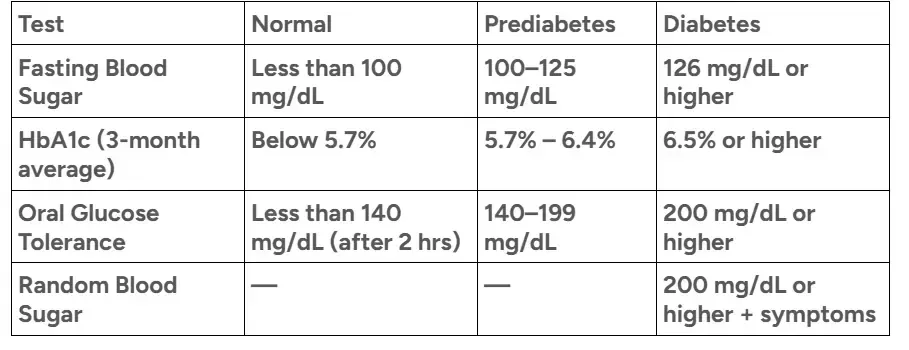
How Is Diabetes Diagnosed?
Doctors use the following blood tests:
Why So Much Fear Around Diabetes?
People fear diabetes because it's often misunderstood and surrounded by negative messaging. The fear usually comes from a lack of clear information about what to do, social media posts, personal experiences, and real concerns about serious complications like blindness or erectile dysfunction.
The truth is there are millions of people living full, healthy lives with diabetes every day.
Most complications are preventable—especially with early diagnosis, lifestyle changes, and proper medical care.
The idea of having to change lifelong habits can feel overwhelming, but with the right knowledge, support, and approach, diabetes doesn’t have to be scary; it can be managed and, in some cases, even reversed.
Small, Informed Steps That Can Put You in Control.
Managing diabetes starts with simple, informed actions. Here’s how to start:
Learn the signs early:
Frequent urination
Constant thirst
Fatigue
Slow wound healing
Tingling in hands or feet
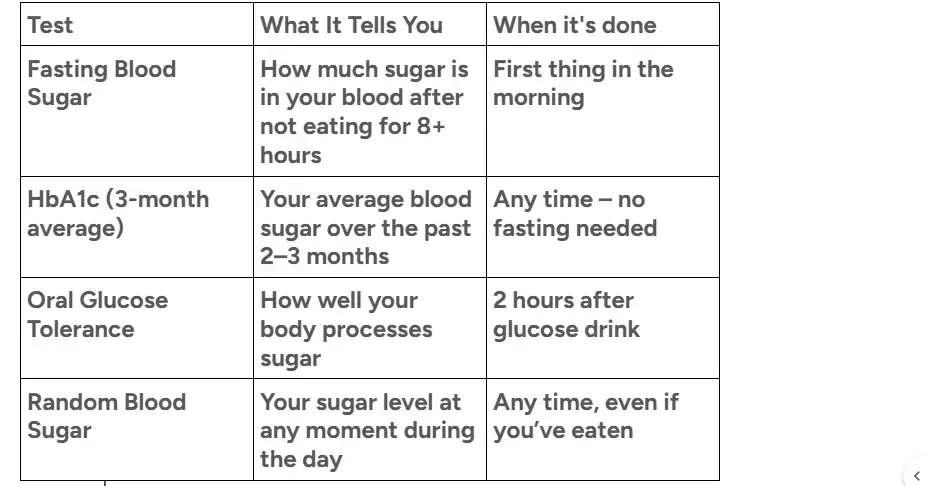
Know your numbers
It’s important to understand your blood sugar numbers. These tests help you know how your body is handling sugar:
Go For Routine Check-ups.
Regular visits to your doctor help track your progress and check other important health markers like cholesterol levels, kidney function, and blood pressure to catch and prevent complications early.
Take Practical, Lasting Steps
Small shifts that make a big difference:
Eat smart: focus on whole grains, fibre, healthy fats, lean proteins, and less added sugar.
Move more: 30 minutes of walking a day can improve insulin sensitivity.
Stay hydrated: water helps regulate blood sugar levels.
Not getting enough sleep can affect your hormones and make it harder for your body to control blood sugar. Aim for 7–9 hours of good-quality sleep each night.
Don’t eat too late at night. While you sleep, your body processes glucose more slowly, which can lead to higher blood sugar levels in the morning. Try to eat your last meal at least 2 hours before bed to give your body time to digest.
Manage stress: stress can spike blood sugar.
Check your blood sugar regularly. Knowing your numbers helps you understand what works for your body—and catch any problems early.
Final Thoughts: From Fear to Taking Control
Diabetes may be part of your story, but it doesn’t define you. Millions of people manage it and live vibrant, active lives. With the right information and steady steps, you can too. Fear often comes from not knowing what lies ahead. But once you understand what diabetes really is, how it works, and how to manage it, then you can take control of it.
The best way to manage diabetes isn’t by guessing—it’s by working with a professional who understands your unique needs.
Reach out today for a personalised nutrition and lifestyle plan tailored to you.
Let’s make living well with (or preventing) diabetes your new normal.
Book a consultation to get started.
If you found this helpful, do share this post with friends and family, and join the NourishWell Health community on FB, IG, X, and TikTok.

Adaeze Oparaku, RDN
Dietitian Adaeze comes with years of experience helping individuals achieve sustainable health through personalized nutrition. She blends science and practicality to make wellness simple, effective, and realistic.
Explore more posts
Explore More Posts
« Swipe for more posts »

Nourishwell Health Insights, Expert Nutrition Guidance, Updates, Tools, and Valuable Resources.


